Latest Posts

The Red Step

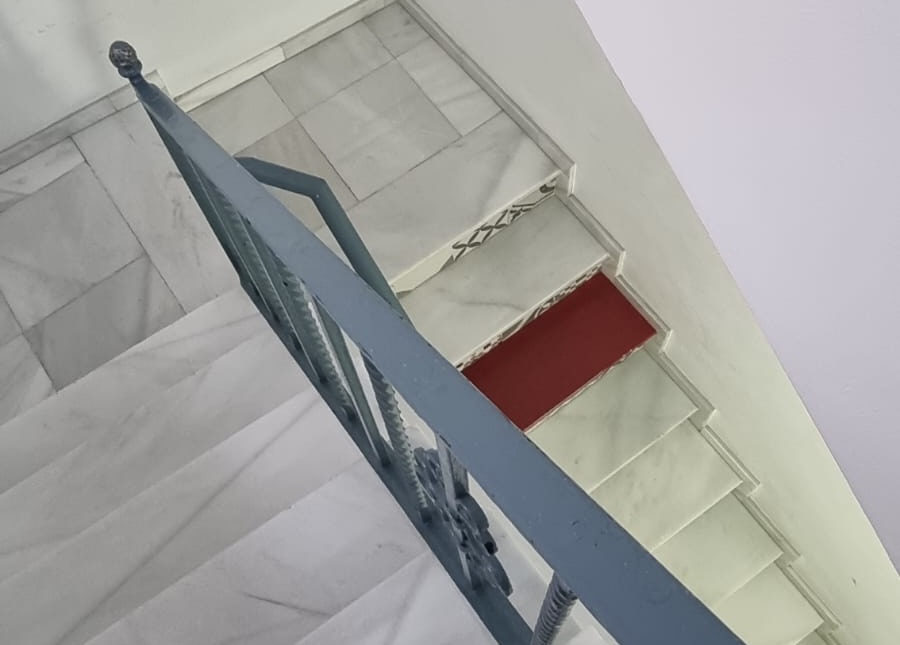
I’m starting to write creatively, currently focusing on short stories. Occasionally, I’ll share them here, and I welcome any feedback as I’m new to this and want to improve. My brother sent me a photo of a random red step, and this is where it led me.
Tina could tell her son was ready to leave. He was stepping slowly through the boxes sat on the living room floor, lifting flaps and peering inside, pulling his hand away quickly as if scared he may disturb the contents.

‘Darling, thank you for all your help today. I can take it from here.’ she steps over to stand beside Marcus and puts her hand on his back moving it up and down in between his shoulders. A gesture of motherly affection familiar to all her sons.

Her youngest, looks down from his lofty six-foot four height, ‘Are you sure Mum? I don’t mind staying and helping to unpack heavy things.’

“No, I insist’, she insists, ‘I think I am just going to leave most things unpacked for a few days so I can get a feel for the place first. I have a bed and a good book, so it’s a quiet night for me. I’ll start unpacking tomorrow. I’ll call you when I have heavy stuff to deal with, promise.’

The poorly veiled relief on Marcus’ face confirmed what she had suspected, but as he picked up his jacket and shrugged it in place, he says quietly, ‘I just want to make sure you don’t feel you have to do things Dad would have done, because you have me for that.’

Struck once again by the kindness of her son, a trait directly given to him by her late husband, Tina stops following him and puts her hand to her chest, ‘Oh my love, what did I do to deserve you?’ Seeing his coy smile, ‘I’ll be fine. I’m fit as a fiddle and can manage a few heavy boxes on my own.’

Walking towards him again she puts her arms out, ‘Now give me a hug and go meet your mates.’ Slipping a fifty-pound note in his back pocket, she taps it saying, ‘This is for the first couple of rounds to say thank you to everyone for helping with the move.’

She stands at the door of her new home and watches Marcus jog down the stairs of the building. As he lands on the first floor, he shouts up the stairwell, ‘Hey Mum, what’s with this red step?’

‘I know, I noticed that when I viewed the place.’ She shrugs, ‘I don’t know, it’s curious isn’t it.’

Three weeks later

Walking up the stairs with a John Lewis bag full of candles and picture frames carefully chosen to add finishing touches to her living room shelves, Tina stops on the step below the red one and looks down. It had been neatly painted with a cheerful red. The nominal scuffs in the middle third of the step indicate that it isn’t particularly old paint, perhaps painted in the last year. But what makes this step particular from all the other grey ones? It is the sixth step on the halfway turn of the flight from ground floor to first. There are no other markings, no numbers or signature to suggest an official purpose for the colour difference. The step itself is in working order, so the red doesn’t seem to be telling people to skip the step. Besides, it has been three weeks since she moved in so if this was a health and safety issue, surely, they would have dealt with it by now. No, the shade of red was pretty, making the step more of a feature than a warning. But why?

I’ll ask the agent, she thought. An easy mystery to solve and maybe an entertaining story to tell the boys when they come to visit.

Two weeks later

‘You still haven’t solved the mystery of the red step?’, Christian, Tina’s oldest son looks almost indignant.

Tina is hosting her first Sunday lunch in the new flat and her dining table seems small with her four grown-up sons and three partners sitting in lines along the benches eating elbow to elbow. She smiles at Christian diagonally across from her as he gets a gentle slap on the arm and warning look from his wife, Sara, who forgets Tina doesn’t mind his bluntness, inherited from her.

‘No, I have not. I’ve had a little bit of a runaround with it.’ All eyes on her now, as she gives an update on her investigation. ‘I rang the agent a couple of weeks’ ago. They knew nothing and just said that maybe I should ask the other tenants. I didn’t feel it warranted me knocking on everyone’s doors. I didn’t want them to think I was some nosey middle-aged woman getting upset about the colour of a step. So, I asked the maintenance man when he was around fixing the latch on the inner door downstairs. He didn’t know much more but he did say that it wasn’t something they did and all he knew was that it had been authorised by the building management company and it was to do with Flat 2 on the first floor.’

‘Ooh the plot thickens.’ says Mindy, third son, Seb’s girlfriend and Tina’s favourite of her son’s partners.

Tina locks eyes and returns Mindy’s enthusiastic smile, ‘Yes, I know, it’s really made me determined to find out what’s behind this red step. There is obviously a story.’ 

Impatient to have the mystery solved, Christian asks with unveiled irritation in his voice, ‘So have you talked to the people in Flat 2?’

Turning back to her son with warm affection for his predictable reaction, she says, ‘No dear, I have been waiting for the next time we bump into each other so it’s a natural interaction. It feels a little aggressive to knock on her door to find out information that isn’t really any of my business.’

Now fully invested, Mindy suggests, ‘You could take round some of your gingerbread as a way of introducing yourself and then just ask once you have swapped niceties.’

Nodding and affirming noises from around the table encourage Tina to go with that plan.

‘I suppose I could. It would be nice to know.’

‘I’ll come with you Mum.’ offers Marcus. ‘How about Wednesday evening? I could come after basketball?’

More nodding and a ‘great idea’ and a ‘perfect’. Enough encouragement embolden Tina, ‘OK then, I better get baking.’

Wednesday evening, 7.15pm

Tina and Marcus stand at the door of Flat 2. With a raise of her eyebrows, Tina nods as Marcus lifts his hand to the door and knocks.

A pretty twentysomething woman, same height as Tina, long auburn hair and striking blue eyes opens the door. ‘Hello?’ her eyes drift up to Marcus and they both exchange shy smiles.

Tina, pleased with the warm reception for her son and accomplice, raises her tin of gingerbread, ‘Hello, I am Tina and this is my son Marcus. I have just moved into Flat 4 above. I thought I would introduce myself and give you some of my home-baked gingerbread.’

The young woman pulls her eyes away from Marcus who is edging towards gormless at this point, and focuses on the Roses tin held out towards her. Taking it and pushing the door open further with her shoulder, she says, ‘Thank you, that’s so lovely. Would you like to come in?’ looking back up to Marcus who is nodding vigorously.

‘That would be lovely…?’ Tina trails off to give the woman a chance to fill in the gap with her name.

‘Oh yes,’ she smiles and says, ‘Sophie, I’m Sophie Clark. Pleased to meet you both.’

They follow her into a high-ceiling, open-plan living space with sitting area, large dining table and modern kitchen all beautifully decorated. Tina decides this would have been the main reception room of the original four-storey Georgian residence, a room similar in size to her living room which she had thought would have been the master bedroom. Like in Tina’s flat, large windows provide an abundance of light creating a peaceful, welcoming space, but a corridor and two doors placed at different points of the room indicate the flat has a different configuration to hers.

‘This is a gorgeous flat, I love what you have done to it.’ Marcus says as he slowly spins around in the middle of the room.

‘Thank you, but I can’t actually take credit. My mum decorated the place. I just moved in when I came here to study. Mum’s an interior designer so she knows what she’s doing.’

‘She certainly does,’ Tina agrees and adds ‘Perhaps she can come and suggest some improvements for mine? It lacks finesse.’

More pleasantries are exchanged as Sophie makes hot drinks, arranges pieces of gingerbread on a small plate and they all settle down into the sofas. They learn she is doing a PhD in architecture, partly inspired by her mother’s love of design. This is her first time living in Liverpool, but she is familiar with the city as her family are from here.

A lull in the conversation and a nod from Marcus, Tina clears her throat and asks the burning question, ‘I was wondering, I noticed the red step on the staircase, and I asked Ron about it as I was curious about why it was painted a different colour. He said it was connected to this flat?’ A slightly apologetic tone comes through as Tina worries she has asked too soon in their acquaintance but is relieved to see Sophie lean back in her sofa with an amused smile on her face.

‘Ah yes, the red step, it is connected to this flat, to my family really. It’s a bit of a long story though.’ Sophie looks cautiously over at her two visitors to see if their curiosity has increased by the mention of a long story. Both lean forward, clearly thrilled by the idea.

Chuckling, Sophie checks, ‘Would you like to hear the story?’ Marcus and Tina both nod and say in unison, ‘Yes please.’ Their expectant faces, like children waiting to hear a favourite bedtime story, beam at Sophie who loves to tell her family’s story and happy to host the handsome Marcus and his charming mother a little longer, Sophie gets up and flicks on the kettle again. ‘Let me get you a fresh cuppa for this. Same again?’

Once resettled on the sofa opposite her guests, Sophie begins.

‘The step was painted by my great grandmother—Valery— who moved into this flat when it was first converted into flats. The government took on the house to accommodate canary girls working at ROF Kirkby during World War II. My great grandmother lived here with three other girls who had various jobs at the factory. Valery was very clever, and she worked as a precision engineer fitting intricate mechanisms in guns. She was also quite a party girl by all accounts and during that time, she met a soldier who was home on leave. He was called Frank. They fell in love and when he went back to the Front, they wrote letters to each other. The next time he came back, he proposed and Valery said yes. This was in 1944. Unfortunately, he was killed in action during the D-Day Landings. He never came back.’

‘Oh how sad.’ said Tina.

 ‘I’m sorry.’ said Marcus

‘It’s OK, of course I didn’t know him. But if it wasn’t for him, I wouldn’t be here, as my nana was born nine months after they said goodbye. This was quite frowned upon at the time, but my great grandmother was a strong woman and she kept the baby. Her family were supportive of her, so after she had my nana—who she called Francis in honour of her father—she worked in a factory in Liverpool and worked her way up to be lead engineer. She never married and, incredibly, managed to buy this flat when it was put up for sale.’

‘Wow, what an amazing woman she was.’ Tina tried to imagine how she could have brought up her children without Pete.

Smiling with pride, Sophie continues, ‘She was. And so was my nana, as she went to university and became a lawyer in London, where she met my granda and had Mum and my two uncles. Valery lived in the flat until she died at the grand old age of 90. I remember visiting her here a couple of times. When she died, my nana and granda lived here for a while but eventually went back down south to a posh retirement home. That was about nine years ago and because we live closest to the place, my mum took it on as a project to do it up, and then, after I finished my degree in Edinburgh, I came here to do my Masters and now my PhD.’

‘That’s lovely that the flat has stayed in the family.’ commented Tina.

‘Well it was actually a requirement of my great grandmother’s will; that the flat would stay in the family and not be sold, if at all possible. So far, everyone has been happy to fulfil the request. And the red step is part of the will too.’

Absorbed by the account of Sophie’s family history, Marcus and Tina had forgotten about the step. They both lean forward and Sophie seeing their enthusiasm to know more, continues.

‘The day that Frank, I guess my great grandfather, left to go back to France, he was walking down the stairs and Valery was standing in the door to the flat. He turned around and asked her to marry him, then and there. She said yes and he left. They exchanged a few more letters before he died and even set a date for the wedding. Valery didn’t know she was pregnant at that point, so Frank never knew he was going to be a father. Valery was devastated of course. She couldn’t get over that the last time she saw him, when he proposed and she said yes, that she hadn’t said she loved him or run down to kiss him goodbye. At first, she hated the step, as it felt it represented a missed opportunity, a missed life she could have had. But when their daughter was born, she decided she would redeem it, as a good memory, one that was full of love and promise. So she painted it red, to set it apart from the others. Then every year, on the date that he proposed, she repainted it. She did this for as long as she was able, and when she couldn’t anymore, my nana did it. My mum is a hopeless romantic, so when my nana and granda moved back down south, she took over the painting. This year was the first year I painted it. My great grandmother asked in her will that the flat would stay in the family, and as long as it was in the family, that we would paint the step on 15 September, to honour Frank and his sacrifice, and also their love, which endured for all her life.’

Marcus and Tina sat stunned, processing the unexpectedly romantic reason behind the mysterious red step.

Sophie giggled to break the silence. ‘I know it’s quite the epic tale.’

Suddenly, overcome with emotion as she thought about the loss of her husband and inspired by Valery’s faithfulness to the memory of Frank, tears begin to force themselves out of Tina’s eyes and trickle down her cheeks. Seeing the concern on Sophie’s face, Marcus scrambles to explain, ‘We lost my dad recently. That’s why Mum has moved into the flat. To have a smaller space and to be closer to me and my brothers who live in either Liverpool or Manchester.’ He pulls Tina into his side and squeezes her arm.

‘I’m so sorry for your loss.’ Sophie says to them both. ‘I didn’t want to upset you with the story.’

Seeing Sophie’s worry, Tina shakes her head, ‘Not at all. I loved the story and now I know about the step, and I hope you won’t mind, but I think I will let it be a reminder to me of Pete. It will be a nice way of bringing him here with me.’

‘Of course, you may share the step.’ Sophie smiles at Tina and reaches out to hold her hand across the coffee table. ‘Valery, would very much approve.’
This Woman’s Worth

I am the daughter of a working-class housewife and a middle-class small business owner. I was born in the 70s and grew up to believe that hard work for fair pay was as much a woman’s right as it was a man’s. I worked hard at school and didn’t question progressing to university. My first job was, at age 11, delivering newspapers to half the village before school five days a week, for which I was paid £5. I progressed to waitressing at the village pub and revelled in spending my hard-earned cash at the Metro Centre twice a year.

I think I was one of the last cohorts who enjoyed a free higher education and graduated with a small overdraft that I bounced in and out of as I stepped into a career. I didn’t go home after I was 18, so I always had a job, or two, to pay the bills.

In fact, since I was a papergirl there has only been one year when I haven’t earned money. That was the year we last moved back to the UK from NZ, and I tried to get work but it was not forthcoming and after six months we were planning to go back to NZ so there seemed little point me trying to get a job. Looking back, it was a wonderful year of family time and friendship, but I remember being deeply unnerved by the whole ‘unemployed’ situation.

Now, a year on from moving back to the UK again, staring down the barrel of 50, I am attempting to go after a dream of being a writer and it’s all very uncomfortable. What ails me most is I am not earning anything.

For the first time in our married life, my husband is the only one with a salary and I can’t find any peace in my days. Who am I, if I am not putting money in the bank?

I can’t be sure, but I think it’s shame I am feeling.

In a desperate attempt to find peace about my jobless situation, I decided to reframe what I consider to be work. I am a wife and a mum so my work is in the home. I thought it might help if I made a list of all the things that I do in a day that constitute work so I could justify my existence with all the things that I do that other people get paid for. The list is like this:

60-90 minutes EVERY day – dog walking

90+ minutes EVERY day – food preparation and service

60 minutes EVERY day – maid

60-90 minutes EVERY day – tutoring

60 minutes EVERY day – taxi service

30-90 minutes EVERY day – personal assistant/administrator/household manager

90 minutes EVERY week – personal shopper

60 minutes EVERY day – therapist

In recent times, the functions historically disregarded as simply a woman’s natural response of becoming mum or wife have been quantified as a role that acknowledges the enormous contribution “a women’s work” gives to society, never mind continuing the human race and predominantly raising it which we carry out in our leisure time.

And yet, even with all this acknowledgement of my productivity, I am not at peace. I think, because not so long ago I did a lot of these things alongside earning money through a career.

My husband and I have discussed at length our budget so we know we can make ends meet without me earning anything. Although I have to say, it leaves little room for fun or the inevitable unexpected bill. Is that why I feel so unsettled? Probably, who doesn’t like to be financially comfortable?

I pray every day that God will give me peace. I believe His reply—through His words in the Bible, through His unchanging presence in my life so far and by the affirmation of other believers I trust—that He will provide and it’s time to write my own words.

It’s not like this faith step into the unknown doesn’t follow a respectable period of trying to get work. Sending out countless applications to jobs I am well qualified for and only receiving the unfortunate letters of uninterest. Realising that the hours of researching and personalising applications delivered the same monetary return as me writing a short story or reading a book, gave me reason to pause. I stopped frantically clicking on ‘apply’ and considered for a moment the reality of getting one of these jobs, based in London, full time hours, with a salary that barely covered the cost of getting there—the idea of going after my dreams to see if they might pay one day, didn’t seem any more crazy than having to find a cheap AirBnB for two nights a week in Farringdon for a job helping others pursue my dream.

There are other things I tell myself, like – you have already contributed significant amounts to the household, it’s OK to not bring in much now. Or a great one for people of my age – if you don’t pursue your dream now, when? Ten years time might be too late.

If I am justified, allowed, meant to, and supported to go after my dream, why can’t I feel peace about it? Why do I feel guilty? That I am an imposition and an imposter. I am a pretender. I am lazy.

Why can’t I get off my own back and let me enjoy this moment I have been working towards? Why can’t I fully immerse myself in this new era of unpaid pursuit of dreams?

Seriously, I am asking, why?

Destined to be friends

I heard someone quote CS Lewis yesterday. It was on the subject of friendship.

“In friendship…we think we have chosen our peers. In reality a few years’ difference in the dates of our births, a few more miles between certain houses, the choice of one university instead of another…the accident of a topic being raised or not raised at a first meeting–any of these chances might have kept us apart.”

He goes on to say that he believes God brings our friends into our lives. Much like people often say they where ‘meant for each other’ when they talk about a lover, he’s saying God orchestrates our lives so we will become friends with people, he goes on to say:

“The friendship is not a reward for our discriminating and good taste in finding one another out. It is the instrument by which God reveals to each of us the beauties of others.”

I don’t know the context of this quote, and whilst I do think God (you can switch God out for whatever higher being or life source you believe in) brings people into our lives and most likely He has a purpose for that, I don’t know that I buy into the idea that every friend I have had in my lifetime has been heaven-sent.

The reason why this quote stuck out to me is because the subject of friendship is a regular talking point in our home. You move countries and friendship is a big part of what makes it both easy and hard in equal measure. Easy in that friends are often your biggest support as you pack up you whole life and take it over to the other side of the world, and when you find yourself in a new place, the people that offer friendship are the most valuable gift you can be given. The flip side to this of course is that leaving friends who you have been living alongside for years, who know the details of your life and who you depend on for certain physical, emotional and mental needs is disorientating at best, heart wrenching at worst. It’s also hard, when you do return back to an old life, as we have done three times, to find friends have moved on, changed and are virtually unknown to you.

I wrote in a previous post that this move, the fourth time we have emigrated across the world now returning to the UK, has been the hardest because our children are teenagers so the consequences of moving country have been much more significant for them. Saying goodbye to friends they have known for six years is much harder because they have known them for almost half their lives. Plus, we learnt quickly, that making friends with teenagers is way harder than you would expect (something to discuss in another blog).

As they have both walked through their first 12 months of life in the UK teenagers, they have grieved the loss of friends back in NZ and struggled to find their fit with friends in the UK. I’ve assured them that friendships will come and go all the way through their lives, no matter whether they stay in one place or travel the world. In fact, meeting new people and collecting friendships as you move from one place or stage of life to another, is a wonderful part of life. Like CS Lewis said above, friends introduce us to beauty and joy that we would never have known without them. Friendship enriches our lives. Even when friendships are hard or come to an end, they teach us about empathy, healing, forgiveness and the importance of letting go.

Moving countries does cause a rather abrupt end to some friendships, ones that would have probably gone on very happily if we had stayed put but distance renders them impossible. At least in this modern age of social media and video calls, some friendships can take on a new form and I am always delighted and sometimes surprised by the friends who stay in touch even when we are thousands of miles apart. In the same way, when you return to a place after years away, it’s profoundly comforting to have friends that can pick up exactly where you left off without any loss of depth or affection.

After 13 years of not living in the same city with one friend and only a few online and in-person catch ups in that time, I realised, as I celebrated her 50th in Wales this spring, that my friendship with her would always be there, always with mutual respect, always with laughter, always with love.

Another friend has stayed in regular contact no matter where I have been, her constancy and loyalty has sustained me through so many highs and lows of life since we met. I know I don’t deserve such an excellent friend but there is no way I will ever let her go.

Sometimes living away from friends can mean that when we come back together we have become closer than when we last met. Maybe it’s because the distance has made us appreciate them more, our separate experiences have somehow shown how much we like each other. Even when finding out I now have a very different belief system to one friend, I realise she has become one of my favourite people in the world (and given I have lived on both sides of the world, that’s saying something).

Then there is the friend I have known since birth, we’re so fundamentally close we are practically sisters. I realise this friend should never be too far away from me, because she is one of the few people in my life who completes me as a person. She has and always will help me to know who I am.

I could go on…the kindred spirit who I lived in the same place for only a year but who I count as one of my best friends, my beautiful friend who I share weekends away with from time to time who has taught me so much about grace and generosity, the one who showed me Jesus, the one who gave birth to me, the sister who my husband gave me, the friend I have only known a few months and already I would trust her to pick up my children if I couldn’t get to them.

In many ways, I do agree with CS Lewis, these women are all angels sent from God, how could they be anything else? They are so perfectly right for me and have made me a better person.

Which is good news for my children. They have only just started collecting friends. It’s exciting really, to be forced to find new ones. Because, what if we hadn’t moved? They didn’t start this new school, or join that swim squad or netball team? Go on that summer camp or get a Saturday job. What gem of a friend would they have missed? And let’s face it, if a friend is meant to be, you’ll find them, maybe multiple times.

A Quiet Mind, Who Can Find?

One of the things I struggled with the most when we lived in New Zealand—and this is going to sound crazy—is life being so easy. I know, what a ridiculous thing to say. It’s true though. I don’t mean that we spent our days sipping cocktails, staring at beautiful views without a care in the world. Actually that last bit does come close to what I mean. You are so far away from the rest of the world on this beautiful, hardly populated island, safe and secure, that you don’t have to worry about the rest of the world. Yes, the bills are high, you still have to do maintenance on your house, teenagers are hard to live with wherever you are, but the things you have to care about are only in your world. Other people’s worlds rarely interrupt your day.

Right now, I wonder how I thought that was such a bad thing as I feel like I am drowning in cares and woes.

Our dog has developed some kind of cyclical diarrhoea that comes with no warning and explodes somewhere in our little terraced house every four to six weeks. The vets don’t have a definitive answer so I worry about how long it will last, how much money we will have to spend to find out what is wrong, how we can live every night wondering what horrific disaster might greet us in the morning.

For the last few months, I have applied for lots of jobs. I haven’t had one interview. Too many other candidates are better suited for the job apparently. One job had 2,000 applicants! I worry that I am too small a fish in a giant pond to ever find my place.

The previous concern is generally right next to the one about money. Moving to a new country is expensive; made worse by unexpected costs like mending a leak in your roof or digging out and replacing your living room floor because it’s been acting as shelter to a colony of rats for who knows how long. Not to mention the regular ‘one-off’ sums for cars, birthdays, holidays, medical or vet bills, clothes, school trips. I worry that our budget that works on paper, won’t work when faced with the reality of life and all it’s unplanned expenses.

Health symptoms are a big one for me. Are my palpitations, upset stomach, pain in chest to do with acid reflux, perimenopause or something more sinister? Will I ever get to talk to a doctor about it? Should my husband do more about his recurring eye infection? Why did my daughter faint two days ago? Am I missing something?

Which makes me circle back to the dog and the house – are we all just symptomatic of some life-threatening mould growing on our walls that we aren’t aware of? Is this all because we should be in New Zealand where life is easy, and the worst problem with our house was ants?

That’s just it though. Even in beautiful, easy New Zealand, we had ants that infiltrated our kitchen in their millions and no matter what we did, if there was even a drip of juice left on a counter they would be marching in their lines within minutes. It drove me mad!

In four years, I had three polyps removed from different orifices, my daughter had to give up swimming her eczema was so bad, I was super stressed working long hours doing work I didn’t enjoy and still we didn’t have enough money. We didn’t see our family, or if we did it was for intense periods that were either too long or too short. I missed my friends and the depth of relationship I have with people who have known me for decades. I missed the Lake District, and Marks and Spencers, BBC TV and Radio 1, 2 and 4, British humour and pub gardens. Evidently I was unsettled enough that I felt it was right to sell our beautiful house, say goodbye to our life, friends and the ants and come back to the UK, where we were warned by many, it was hard going.

We have noticed the difference living in the UK where the news is constantly telling us about the problems of our country, of Europe, America, and the Middle East and how it’s our responsibility to fix them. I wanted to be closer to family but that means I know more and I care more, and I legitimately could be doing more now that I am on the same island. My children talk about the differences in teenagers here and I worry that they are being exposed to too much too soon. Roads are busier, so are schools, hospitals, shops, cafes, beaches, cinemas. There are more people, less space.

I can’t be surprised then that it has been a hard year since we moved back. But it feels so hard right now, I worry we should have stayed in New Zealand, where things were easier. Maybe I am not cut out for living in a country of 68 million and whatever it is that is upsetting my dog’s bowels.

If we’d stayed, would I be happy right now? Wouldn’t I still have things that would cause me stress? And wouldn’t my body react to that stress with acid reflux or palpitations? I would have still turned 49 and have the same hormone imbalances. The dog might still have developed a digestive problem. I might have plenty of work but hate it. My children would have stayed in their schools with their friends, but they wouldn’t have met the friends they have here or be expanding their brains in a more challenging curriculum.

Point is, we’ll never know what life would be like if we’d stayed. And as a wise friend of mine once said, can you add even one hour to your life by worrying? In fact, we now know that worrying takes hours off your life. Every living being has cares and worries, I know that my cares are minimal in comparison to most. I have been given a life to live, with its strifes and strains, it’s mine to live; so one day at a time, trying my best to not worry, I shall live it.

Choosing the way to go

There are many ways to leave life, starving myself to death is not the way I want to go and I decided that when I was 19.

When I was 15, I began losing weight. It was easy. I was already really into sport, playing hockey and netball, running, cycling and anything else that was competitive. Gradually, and without a plan, I started cutting out food that had fat in it. I began saying I didn’t like chocolate and only eating sweets that were full of sugar but has the all important ‘Trace’ next to fat on the nutrition label. I whittled my breakfast down to one slice of toast which would be tossed aside as I ran for the bus. I spent my lunch money on sweets and magazines, and avoided the lunch hall by running around the sports field for half an hour. I am not sure how long it took, I think maybe a year but certainly by the time I was in my A’level years, I was in the habit of eating only one small meal a day and not missing a single chance to exercise.

I hated how my body looked. I was petrified of being fat and I was obsessed with all the things I had decided would protect me from putting on weight.

My mum had to watch silently as anorexia nervosa crept in and consumed me, knowing that if she spoke to me about it, I would be even more determined to do my own thing. I expect it’s quite common but sadly, my mum, the person closest to me, who loved me the most and wanted only the best for me, was the last person I would listen to when the disorder was controlling my choices.

At my worst, I was too thin to menstruate and I had only one bowel movement a week. I looked ill enough that teachers rang up Mum to let her know they had noticed I was losing weight. To clarify, this kind of involvement in the welfare of pupils in a rural secondary school in the nineties was not the norm.

Mum had noticed. How could she not? I wasn’t exactly stealth, there were dried up pieces of toast at the end of our drive and the snack food I once devoured when I came home from school was no longer on the shopping list.

I was a strong-willed, totally brainwashed teenage girl whose favourite movie was Pretty Woman and was regularly seeing pictures of Kate Moss and Cindy Crawford in media. At least, in those days it was just printed or the occasional TV programme. The 24/7 bombardment of social media on devices gives no safe space for a mind that is already full of self loathing. What probably began as a way of controlling something in my life when a lot of other things were happening outside of my control, had become another thing that was controlling me and separating me from the people who loved me the most.

Mum did what she could, including enlisting the help of a dietitian to try and talk some sense into me. I just manipulated the information they gave me and lost more weight. It was a friend’s mother, who was a nurse and somebody I trusted and crucially was not my mum who convinced me to meet with a counsellor to talk through what was undeniably disordered eating. I think by that time, I was so exhausted by the regime I was enslaved to and that no matter how much weight I lost on the scales, I only saw fat in the mirror that I finally admitted all was not OK and agreed to meet with a counsellor.

I don’t remember much of my sessions or even how many I had. I remember he warned me in our first session that if I was to get under a certain weight he would have me sectioned. For the first time, I realised what I was doing was dangerous and I never did go under that weight. Also, it was a target that I was in control of so it appealed. I am sure it’s not always like this and it might sound a little like a scene in a film, but there was a moment in one of our sessions where I connected my fear of putting on weight with a fear of being rejected. I was a child of divorced parents and I had gone through the trauma at a very young age without talking to anyone about how the decisions of others had made me feel. My child self had believed that she was no one’s first choice, and that at any point, someone who loved me would love someone more and I would be alone. I believed that what I wanted was not important or even considered. I was the youngest child in our blended family and I was also the least academic and the loudest spoken. I am pretty sure I was annoying as a child and a teenager. Siblings and parents asked me to be quiet, show less emotion, don’t be so open with your feelings, stop being so loud Claire, you’re too much.

Shrinking my physical self was possibly a dysfunctional response to the request to be less. Of course they weren’t asking me to disappear but a sense of not fitting in coupled with a universal embracing of heroin chic in the nineties worked out to be a dangerous combination for me.

One of the hardest parts of a mental health disorder like anorexia is that there is no quick fix, no medicine that will bring you back to full health. It takes conviction and determination to sink into it and it takes the same to pull yourself out of it. The bad news for any parent with a child suffering from this, is whilst you can get help and you can support your child every step of the way, they will only be healed if they choose to be.

I can’t credit one thing that got me to stop believing the lie that eating was the enemy. Counselling helped to identify hurts that fed the lies. Patient family members and friends who kept telling me the truth and demonstrating normal eating were important. Prayer was a big part of my recovery. Someone falling in love with me who brought calm assurance that he would never leave me helped too. But ultimately, it was the decision I made one time right about my nineteenth year, and then over and over again for several years after, to not measure my worth by standing on scales, to face the fear and eat when I was hungry and trust the truth that my body best served me when it was healthy, not starved. It was not a smooth path back to ‘normal’. Physical health came years before mental health. I am proud of the work I did and I am so grateful I chose a life that includes the love of food, because it has filled me with joy in all the different ways food can.

Now that I am a parent of teenagers and I listen to mothers who have children that are struggling with eating, I wish that I knew the secret of how it can be avoided or some quick fix to get them back on track. Devastatingly, I don’t think it works that way. Every person is unique and how they get to the place of choosing to starve themselves is particular to them, so will the road to recovery be entirely their own. I can see that it’s excruciatingly scary to watch a loved one suffer and know that you can’t fix it for them. I thought that my mum was being dramatic when she told me years later that she would lie awake at night worrying that I would die from it, but I can see how she got there. It feels so out of control.

My message of hope is that it only takes one decision to get better, repeated over and over again, to stamp back the fears and destroy the pattern of destruction. Make it once, then make it again. Eventually it becomes a habit to choose life and the fear has no power any more.

Coming along for the ride

The first time we emigrated to New Zealand, we were a family with a nine-month-old and two-year-old. Those babies were an extension of us and apart from the 36-hour flight, which was either sleeping or non-stop Peppa Pig, nothing really changed for them because their whole world was us. It was easy; we move and they come with us.

Even when we moved them at five and seven and then again at seven and eight (my maths is fine here, they are 18 months apart so depending on what month it is, they are one or two years apart), it was relatively simple. Yes they had to say goodbye to friends, family and familiar things, but at those ages, as long as you have Mum and Dad behind you, you’re brave enough for anything.

The biggest challenge I remember were when we came back to the UK in 2017 was being introduced to the school zoning system and having to literally argue our case to the local authority so both children could go to the same little school in the village we were living in. Totally worth it, it was the most delightful school. And, when we returned to New Zealand in 2018, we were shocked to discover that a new nine-year-old girl beginning at a primary school can be seen as quite the threat to some well-established friendship groups. The political agenda of a Y5 little miss is not to be underestimated. That said, these were small hills that were overcome in a couple of weeks.

Nothing like the mountains you face when you are moving teenagers to the other side of the world.

One thing to bear in mind, if you are moving between the southern and northern hemispheres with school-aged children, is that the academic years begin and end at different times of the year. This means depending on the month your child is born, they will most likely start in a different year to the one they were in. We have a June and a November child. This means for the June child, when they move to NZ they go back a year, returning to the UK, they will skip forward a year. Vice versa for the November baby.

This meant, when we returned back to the UK in July, my 14-year-old daughter who started Y10 in NZ in January, began Y10 again in September. My 13-year-old son who was only halfway through Y8 in NZ, jumped up to Y9 in September. They also enjoyed two six-week summer holidays in the first six months of 2024, which is fun but means they have missed six weeks of schooling that year. Factor in that the UK education system is a lot more focused and demanding than the relaxed schooling in NZ, and you have a shock to the system for two Kiwi teenagers!

We did quite a bit of research into schools, including a nine-day trip to the UK in May 2024 for me to visit a few contenders and get a gut feel of where would be good for our children. Not easily achieved within a one-hour tour, but it was enough. Pastoral care was a big requisite as we knew joining a new secondary school where they knew no one was going to be socially and emotionally challenging as much as it would be intellectually.

A term and a half in, I am sure we made the right decision on the school, but blimey this has been tough. In the first six weeks, our children were planted into a school of over 1,200 teenagers that they had never met, taught by teachers who didn’t have a clue of what they had been taught so far, and introduced to new systems for communication, discipline and eating lunch. In that time, they had to move four times between different AirBnBs whilst their father was grieving the loss of a close friend and their mum was ploughing through the legal and financial assault course that is buying a house in the UK. Home life was far from a peaceful haven to return to after a tough day at school.

Navigating how to support and advocate for my children in that time, was one of the hardest parts of parenting so far. I had woefully over-estimated the curiosity teenagers would have for new students arriving from a foreign land. I thought my two Kiwis would be exotic and interesting, and it would play out like some teen drama where they found their tribe and the girl/guy of their dreams would invite them to prom, disrupting the status quo of the school’s social hierarchy but in a good way, where everyone realised that being different is cool and something to be celebrated. Not so. They were welcomed with a good dose of apathy and disinterest. Teachers were too busy teaching and putting the fear of God into my Y10 daughter about GCSEs to ask how she was adjusting to the new curriculum and if they could support her in any way. Boys assigned to help my son get some food at lunchtime wandered away and he found himself slowly eating a cookie in a corner on his own until his next class.

I don’t blame anyone because we’re all just getting through our days and my children are only top priority for me, but so many times I wanted to scream at people ‘all they need is just a little bit of attention and a smidge of empathy and they will be an asset to your school and any friendship group that will have them.’ We weren’t asking for the red carpet. Far from it, my children wanted to fly so far under the radar they became these little quiet mice that dreaded being noticed, but if they had been given a warm welcome, a smile, an invitation to walk to class or join a group for lunch it would have been so different.

To their credit, the school responded really well to a few panic emails from me and the teachers quickly stepped up their game. It didn’t take much, just a few encouraging words and brief catch ups at the end of class and my children were getting decent marks on homework and tests. Friendships saw a slower recovery but they’re finding their people and the boys and girls that have shown kindness to my children have my gratitude forever.

I keep telling myself that when they look back on their childhood and the many moves we have put them through, they will be grateful for the opportunity to live in two wonderful countries, all the people they have met, the cultures they have been immersed in, even the challenges they faced because it made them stronger and more empathetic to others. I hope my two children will become adults that are wise and grounded beyond their years, and will be a blessing to whoever they live with wherever they go in the world.

For now though, I question if we made the right decision. I worry that I have asked too much and that things would have been much easier if we had just stayed put. But then, do I wish for an easy life for my children, or do I wish for a full life?

When it’s not your job

Having a job is a big part of emigrating. In fact, it’s necessary if you want to stay.

Our motivation to move to New Zealand in the first place was to bring our children up somewhere beautiful and wholesome and we wanted an adventure. Thankfully, Gareth worked for a global engineering company that could facilitate that.

Due to a natural disaster, the job became much more than a way to get a visa. It was an opportunity to pursue his career, using his skills (and gaining lots more) whilst working within a team of highly motivated and inspiring colleagues to literally rebuild a city after devastating earthquakes had flattened it. A job that makes a difference, how satisfying is that.

Five years later, we moved back to the UK because Gareth’s dad was sick and at the same time he found that out, his company offered him an opportunity to work on a big, ambitious project.

The third emigration was because we didn’t feel like we were done with New Zealand and wanted to go back for more time. His team in Christchurch welcomed him back with open arms and we were able to move back.

Almost six years later, and due to homesickness (on my part), wanting to be closer to family, giving our children a wider choice for higher education and ultimately believing that the UK was the right place for us to be for the foreseeable future, we bounced back. This time, the move presented a chance for Gareth to nudge his career in a slightly different direction, pursuing what he loves the most, programme delivery.

The pressure to have a job so we can move countries has always fallen squarely on Gareth’s shoulder. Since we had children, he has been the main breadwinner in our family. This was a conscious, joint decision we made which has served our family well and allowed Gareth and I to work in our strengths. Happily, the burden of being the main breadwinner has also allowed him to advance in a career he loves (most of the time).

That said, on top of my unpaid work as primary caregiver to Gareth and our children, I have generally had paid work too.

When we moved to NZ and the children were babies, I took a minute to get us settled but soon landed freelance event management and fundraising work for various post-earthquake endeavours.

The year back in the UK in 2017, gave me a unique moment in my life where I didn’t work for over 12 months. This moment of no bosses, clients, targets or income requirements gave space for a career change into writing, giving me time to get qualifications in copywriting and proofreading.

When we returned to NZ, I landed in Christchurch with a job. Not in writing and not enjoyable, but helped us buy our dream house so it served its purpose. I still don’t know how I stuck out almost a year there!

This brings us to now. I’ve been working freelance for five years, building up experience in copywriting, proofreading and project management for much-loved clients down under. All of which I gradually said goodbye to to give me the time and capacity to coordinate our fourth international move; tasks included selling a house, booking flights and accommodation, transporting our dog, organising a summer with no fixed-abode, picking a town to land, finding a school, supporting Gareth and the children as they braved being the new person at work/school, buying a house and so many more things that are part of moving a family of four with a dog across the world.

All that’s done now, and I need want work. I have the privilege of not needing to work to pay the bills, but income for all the extras and unexpected would certainly be welcome. Where should I look? Who should I ask? Does it need to be the dream job? What even is that anyways? Should I look for challenging or easy? Part-time, full time? Employed or freelance?

All I know is that as always, the paid has to balance with the unpaid. That is the primary requisite for a mum that would like to work on top of looking after her family. The paid work, has to fit with the unpaid (so much more important) work of supporting my children as they become adults.

Don’t stumble on the ‘much more important’ part of what I just wrote. That doesn’t mean I consider my paid work as not important. I have almost always chosen work for its value and meaning (when I haven’t, it has not gone well). To get paid to do something that brings good into the world is the goal always. But it takes the absolute best of a person to nurture kind, honourable, intelligent, healed and whole people. The world needs them more than a well crafted marketing campaign or an event delivered on budget.

Still, I can do all that human-raising and have time for some other worthy work. I’m asking – where do you start when you arrive back in your home country, having not worked here for 12 years, living in a town you hadn’t stepped foot in six months ago, with 30 years of experience that is so varied there is no job that can utilise it all.

Please don’t say LinkedIn.

New start

This is not what you think it’s going to be. There will be no new year resolutions. No declarations or goals to be shared. No new me.

Last year had all the new things; all the change. We left our life in New Zealand (again) to start life back up in the UK (again). We moved to a place we have never lived before. New job for my husband, new school for my children. New house. New sport teams. New friends.

It might well have been the most stressful year of my life.

January 2024, we began to move. A year on, we are moved. Changes everywhere. Postcode has letters in. Our bodies, belongings and dog are under a different roof. All our bills are in pounds. It’s winter not summer. We shop at Sainsbury’s not New World. Chocolate is not Whittaker’s. We are 13 hours behind not ahead.

All these changes required my full attention. My family needed my full support. Day-to-day life took all day, every day.

Six months into our new start, I am finally looking up to see what’s ahead for me. What is around the bend?

I will always love you

Dear Child of Mine

I want you to know that I will always love you.

I loved you when you were the size of a grain of rice and your heart beat was undetectable. When you made me sick and took away my ability to tie my own shoe laces. The strongest motivator to go through two days of the most pain I have ever felt was you. We hadn’t even met but I would have endured that pain for as long as it took to bring you into this world.

When you screamed at me for hours and refused to give me sleep, I loved you in every sob and exhausted scrap left of my being. When your head was adorned with delicate, golden curls or when you scowled with the flick of one eyebrow, I swooned at your beauty. You could be covered in snot and vomit and I still think you are the most lovely thing I have ever seen.

When you pulled my trousers down in the middle of a busy airport, when you lay on the floor of a playground and wouldn’t walk when I asked you to, when you broke three windows in one house, when you took out all your moods on me and that time when you said you hated me; I forgave you in a second and I loved you the whole time.

I have never felt so hopeless at a job than I have during my motherhood career. There have been times when I have truly sucked and failed miserably at being your mum. The times when I screamed at you because your dawdling made me late for work, or when I chose to watch TV instead of spending 10 minutes talking to you before you went to sleep. I have felt such shame at how badly I have done my job. And yet, despite the fact that the pay is non-existent, there are no holidays and motherhood has taken the biggest toll on my physical and mental health, it’s by far the best career choice I have ever made and I will never, ever, resign or retire.

I don’t care that you have made me dull and risk averse. Before you, I loved an adventure away from home. Now, all I can think of when I travel away from you, is when I can get back to cook your dinner. I used to love pushing myself physically, now there is a little voice that asks, what if I got hurt and I couldn’t take care of you. Plus being a mum means I have to say no so much and be responsible all the time. I know you won’t believe this but I used to be way more fun than that.

Becoming a mum meant I had to change so much about myself. Some changes just happened, some I had to work at, but they were all fuelled by this need to give you the launch pad to live your best life, have a childhood of happiness and a future full of opportunities. It has made me feel like I have lost myself and forced me to witness me at my very worst. It has been truly heartbreaking at times, but I treasure the scars. I have seen how strong I am, how faithful I can be, how wonderful it is to put another person’s needs before my own and to get a glimpse at how much I am loved by my heavenly Father. I’ll keep all the carnage to have the glory of knowing unconditional love.

If I am doing this right, then not too far in the future, you will start to push away from me, you will choose friends over parents, you’ll take risks I don’t want you to, you’ll give your heart to someone who will break it, you’ll leave home. Imagining what my life will be like when you are not dependent on me is probably the bleakest thing I could think of right now. And yet, I promise I will let you go. I will tell you to step out of the nest, make your own choices, go your own way. Live your life.

When that happens, know that from the second you were conceived, you had me for eternity. Even if you are a thousand miles away from me, I will be with you. I will always be yours, and I will always love you.

Mama x

In the mirror

I started working for a charity last year that is focussed on seeing homelessness eradicated.

Whilst I have always been aware of homelessness and have been involved with charities that work with homeless or deeply impoverished people, I have lived a life that has come nowhere near what people suffer when their choices and resources are so diminished that they have to live on the street.

I walk past someone who is sleeping on the street, see them in the news or depicted in films, hear stories about the injustices and abuse that have led people to the lowest of lows, and think that I am so far away from them that we have nothing in common.

It creates a sense of distance and separateness that means I don’t stop on the street when I see someone begging or just clearly in need, because my mind has these thoughts:

  • They’re asking for money and I don’t think that’s what I should give them, or more often than not I don’t have cash anyway
  • I don’t have anything alternative on me to give them, and I don’t have time to get something
  • What if I did take some time to get them some food or drink but then they don’t want it? It will be embarrassing for them and me (mostly me).
  • I could ask them what they would like, but what if they ask for something I don’t want to give them, like money or alcohol?
  • If I do speak to them, what do I say? I don’t want them to feel patronised or talked down to.
  • What if they touch me? Am I going to be OK with that? I have to be, but I know my tendency to worry about cleanliness will kick in and I would hate for them to see that.
  • What if they do something socially unexpected, like shout or say weird things? How will I handle that?

All these internal questions buzz around and I have walked past them and done nothing. On to the next thing. And as I walk on and shift back into what I was doing and where I was going before I saw the person, I explain away my ‘not stopping’ with these questions: when do I ever speak to strangers on the street? If a businessman was sat on a bench, would I go over to him and ask if there is anything he needs? Or join an unsuspecting pair of girls chatting and introduce myself? No, so why is this any different?

It’s different because they have asked for help. They may have spoken out and asked for money, or they have a sign in front of them asking for help. Even if they haven’t done either of these things, they have sat themselves on a busy street, where they know people will see them, in their unwashed and uncared for state. They have shown their vulnerability and shame to others. To people they know will judge them. They are asking for help.

I was a big fan of Michael Jackson when I was young and I can sing ‘Man in the mirror’ word for word. It describes what I am writing here – I’m looking at the woman in the mirror and realising that I want to make a change. I want to be a person that stops. That recognises that for all our differences, we are fundamentally the same because we are human. Our life experiences might be vastly different, but there will be things we can connect on, even if it’s just that at that moment we are currently standing under the same sky and experiencing the same weather. As we Brits know, one can always talk about the weather.

My job is forcing me to learn a lot about homelessness, its causes, its victims, its heroes, its injustices, its solutions, its despair and its hope. I am challenged on so many levels by my ignorance, my privilege, my worldview, the actions and prejudices of my ancestors (and me), the construct of my life that leaves no space for helping people outside of my social circle.

Just by educating myself and being open to understanding more about the problem of homelessness, I am exposing myself to knowledge that is causing me to want to change. I am convicted. I am inspired. I am convinced that I can approach a person on the street that is asking for help, and say ‘Hello. What do you need? Can I help?’

I’ll let you know how I get on.